Regional South Indian Thali Traditions
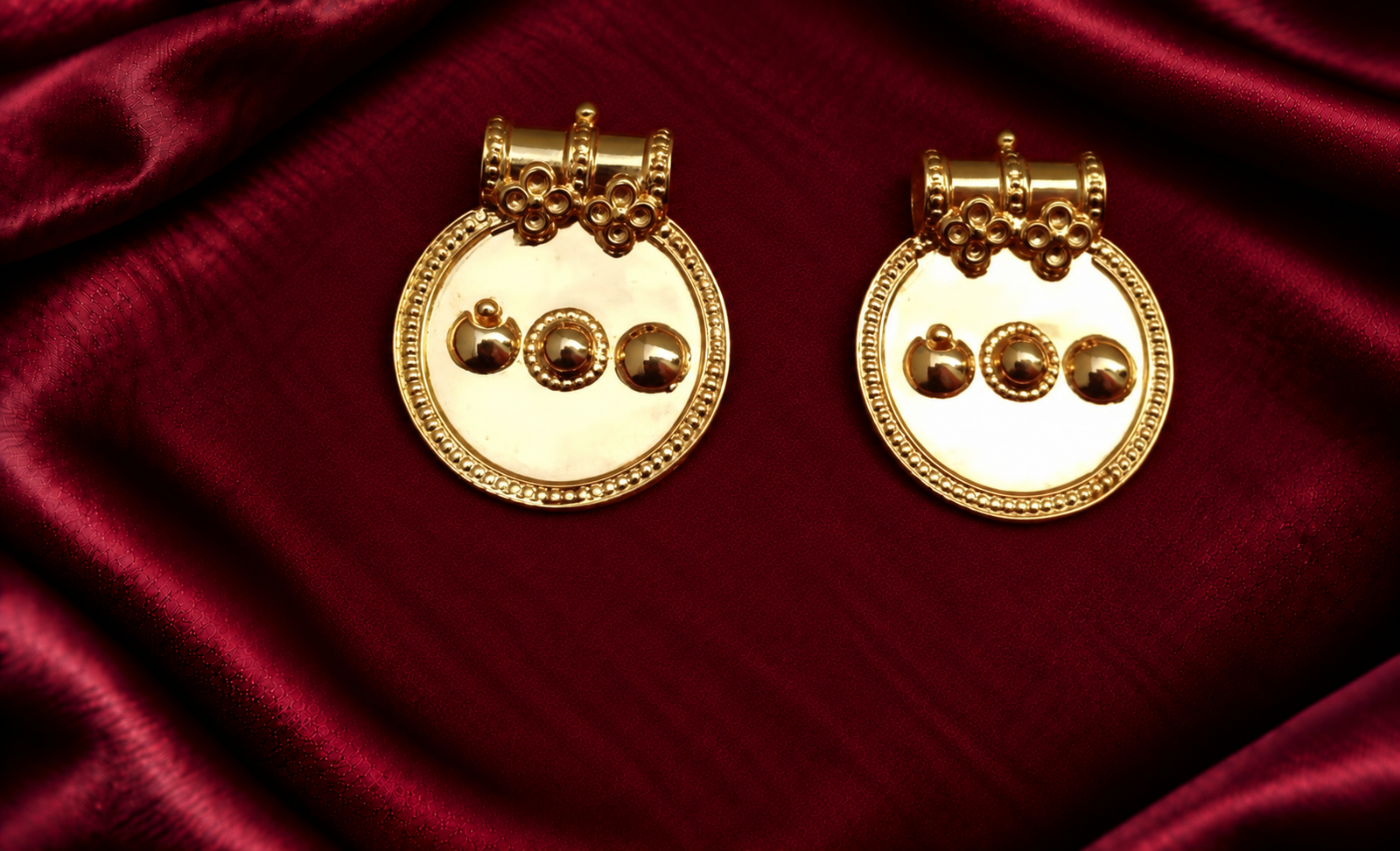
The Thali (Mangalyam) is worn across South India, yet its form is far from uniform. Tamil, Telugu and Kerala communities each carry distinct Thali traditions, and within Tamil Nadu the design varies further by community. This overview helps buyers understand why forms differ and how to brief a manufacturer accurately.
This is a descriptive cultural overview, not an authority on custom. Community elders and family tradition remain the final authority on what a given wedding requires.
Why regional tradition governs the Thali
The Thali’s shape, components, motifs and even the cording are shaped by community custom passed through generations. A design correct for one community may be unsuitable for another. This is why a manufacturer experienced in regional traditions will ask which community the piece is for before quoting.
Tamil community Thali traditions
Within Tamil Nadu, communities such as Iyer, Gounder and Chettiar each carry distinctive Thali patterns with characteristic proportions and motifs. These are made to tradition, and a maker familiar with the range can interpret a family reference accurately. A generic substitute rarely satisfies the custom.
Telugu Mangalyam traditions
Telugu regional Mangalyam styles differ from Tamil Thalis in form and assembly. Buyers sourcing a Telugu Mangalyam should specify the tradition explicitly so the maker works to the correct reference.
Kerala gold Thali traditions
Kerala-style gold Thali designs carry their characteristic forms, distinct from Tamil and Telugu traditions. As with all regional varieties, weight and finish are confirmed per piece at enquiry.
Arakku sets and ceremonial forms
Arakku Thali sets are coordinated sets made to traditional proportions. Because “set” can mean different things across communities, confirm the number of components and the assembly the family expects before ordering.
Respecting custom when commissioning
The maker’s role in a regional Thali is to honour the tradition, not improvise on it. A reputable manufacturer will ask for the community, any family reference, and the preferred weight and purity — then develop the piece to that brief. Treat any maker who offers a single “standard” Thali without asking about tradition as a warning sign.
How to brief a manufacturer
- State the community and regional tradition.
- Share any family reference piece, photograph or sketch.
- Confirm the preferred gold purity and BIS hallmarking.
- State the weight range and whether lightweight options apply.
- For sets: confirm the number of components and assembly.
ASG manufactures Thirumangalyam varieties spanning regional and traditional South Indian designs in its Coimbatore workshop. Share your community and reference, and the workshop will develop the Thali to tradition.
Informational
Jewellery retailers, cultural institutions, families
regional South Indian Thali traditions
A respectful cultural survey that helps buyers brief a manufacturer accurately on a regional Thali — emphasising that community custom is authoritative and that the maker’s role is to honour it, not improvise on it.
Continue the journey
Frequently Asked Questions
Yes. ASG’s Thali designs span regional traditions including Iyer, Gounder, Chettiar, Telugu, Kerala, Arakku, Pottu and lightweight Mangalyam, all made to tradition.
Yes. Share a photograph, sketch or physical reference and the workshop will develop the Thali around it, honouring the community tradition.
Community elders and family custom are the final authority. The manufacturer’s role is to honour the tradition accurately, not improvise on it.